I shall probably not add anything to this blog until the New Year. Season’s Greetings!
There will be a pause
November 24, 2009 by StephenThreatened Plants for 2010
November 9, 2009 by StephenI had forgotten that these had already been published in BSBI News of September 2009. The ones of local relevance are:
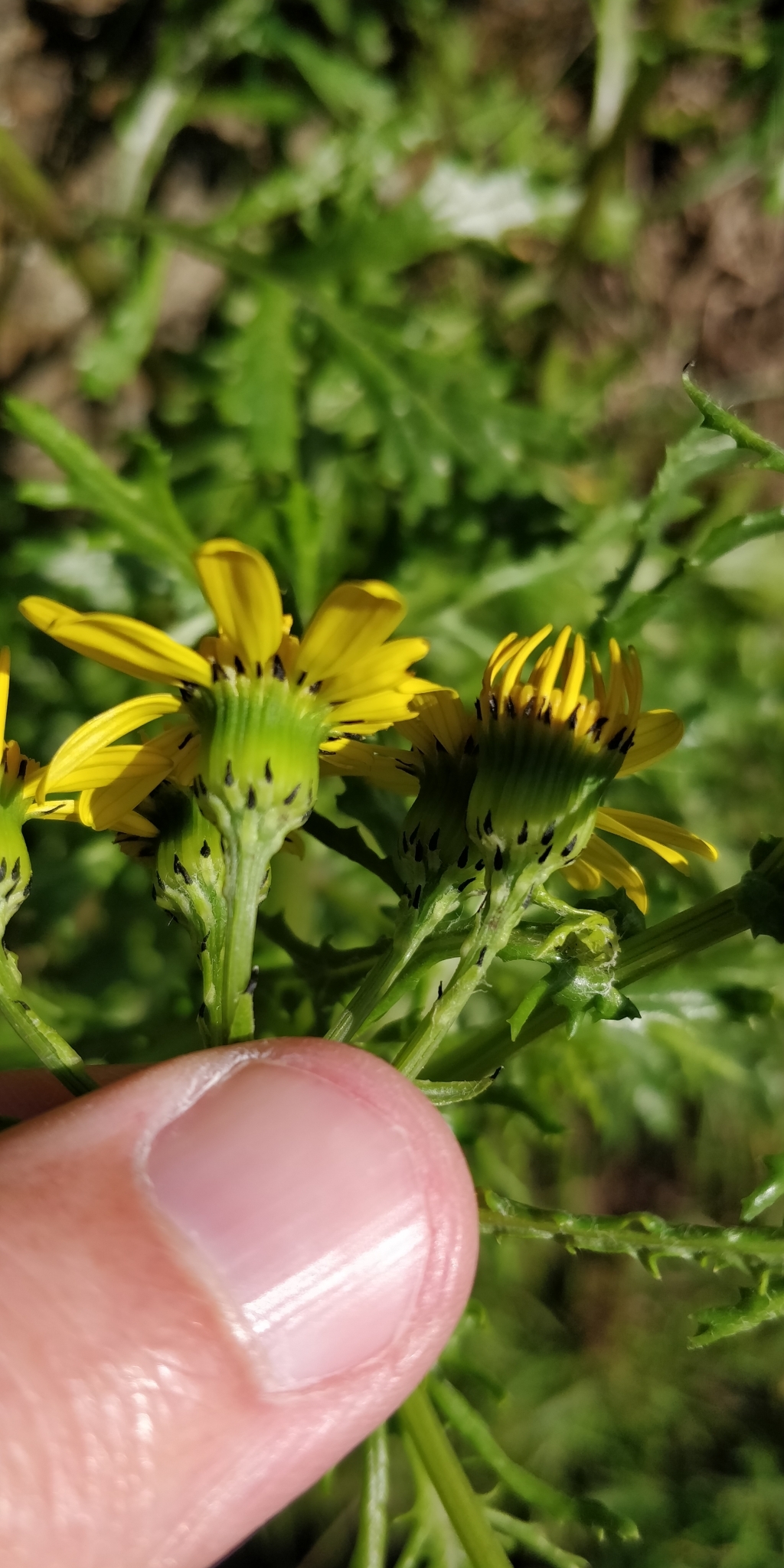
Chrysanthemum (Glebionis) segetum (Corn Marigold)
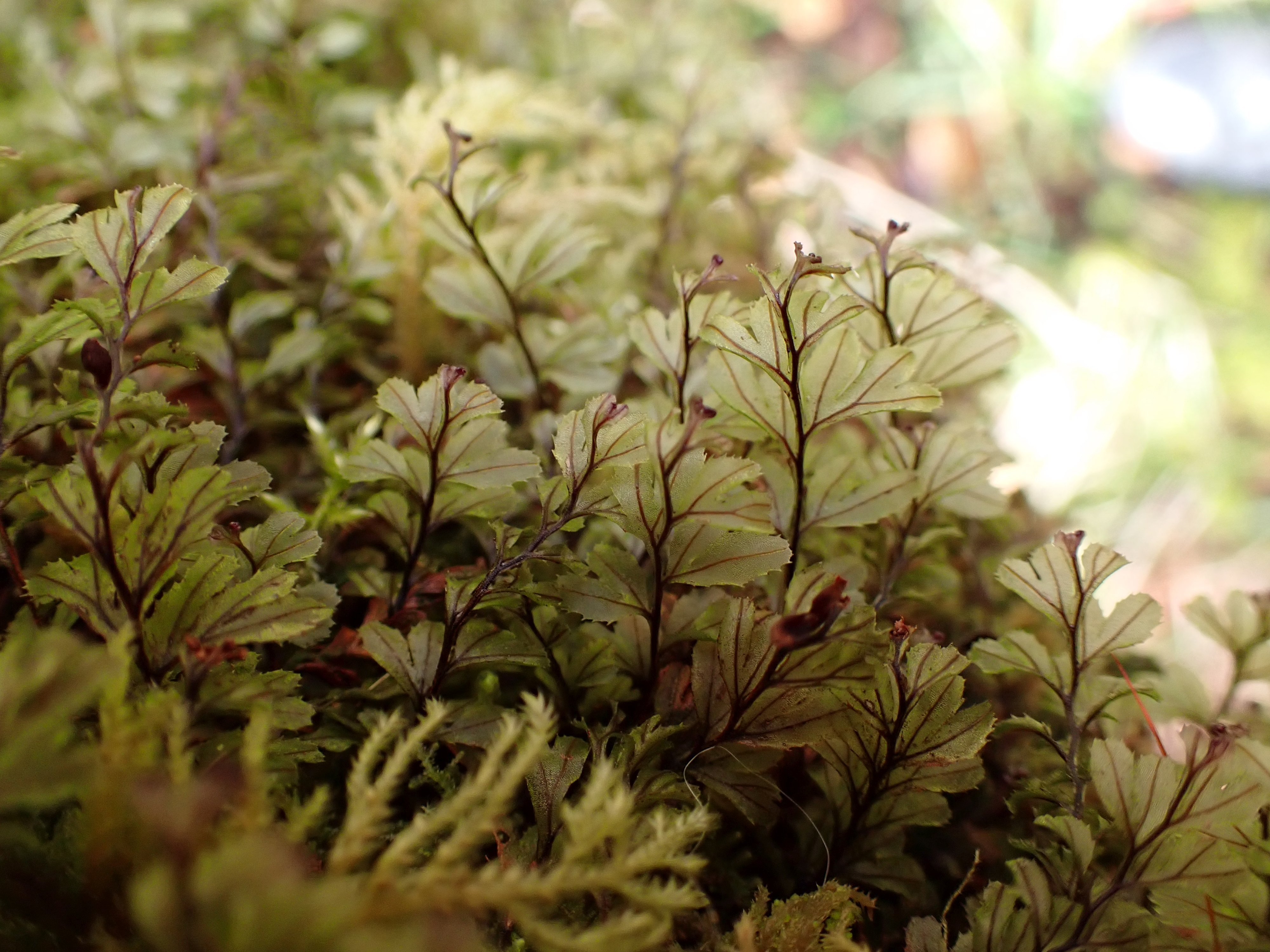
Polystichum lonchitis (Holly Fern)
Sibbaldia procumbens (Sibbaldia)
The first is largely restricted these days to introductions of various sorts – imported soil for roadworks or planting of wild flower seed mixes – except on Muck where it is abundant in arable fields.
The second is local but with well-known sites.
The third is also local but with some of the sites poorly defined and this is the one that is likely to take most effort.
Catch-up time
November 6, 2009 by StephenThere has been a lone whooper swan on the sea in front of the house for two weeks now. I am beginning to think it will stay for the winter though I had hoped it would find others of its kind. Last year there was a lone one for about a week. I counted 13 red-throated divers on the sea too recently. I am used to seeing them in pairs (plus young when present) on lochans.
My friend Calum who has taken me to Rona so often in recent years has sold his boat this summer which means an end to easy trips to Rona. I can get to Scalpay in my own little boat and maybe if done in two stages I could get to Rona and stay in the bothy.
Over the winter I shall add another page to my Flora of Raasay and Rona listing plants in taxonomic order and linking each to its main entry. Unique visitors since I started the counter now stand at 475.
I have sent away my records for the Threatened Plants Project. I expect to be told the identity of the 2010 target species at the Scottish Annual Meeting of BSBI in Perth tomorrow,
The Royal Botanic Garden Edinburgh is running a Certificate in Practical Field Botany course on Eigg next year and I have promised help with provision of known records – in return for which I hope to gain some new ones! On a recce for the course in September, Heather McHaffie spotted some proliferative Cynosurus cristatus (Crested Dog’s-tail):

Proliferative Cynosurus on Eigg Photo: H McHaffie
According to the new BSBI Grasses Handbook such specimens are “common late in the season”.
I think I have found the source of my wood-boring beetle – an old desk once in Raasay Primary School used in more recent years as a saw-bench. It has been burned!
The Garage Beetle
October 20, 2009 by StephenThe beetle from my garage turns out to be Hylotrupes bajulus (House Longhorn Beetle) and is new to the Hebrides. Richard Moore says that it is found in dry seasoned coniferous timbers especially in attics of houses and packing cases; larvae can take from three to ten years (or more) to develop.
This is not all good news in that the larvae bore holes in wood rather like large woodworm. However, I am reasonably confident that it will have emerged from wood I have been given to burn rather than from the garage timbers which are all treated timber and not that old.
I have been away for over two weeks – hence the gap in blog.
Insect News
October 1, 2009 by StephenI may need to change the title of this blog at this rate…..
On Saturday there was a fine specimen of Uroceras gigas (Wood Wasp or Horntail) outside Raasay Village Hall. I spotted one there earlier in the year too so maybe they came with the wood for the hall. I am waiting for an image from my friend Kyle to check whether it was of the northern race with a black ovipositor sheath.
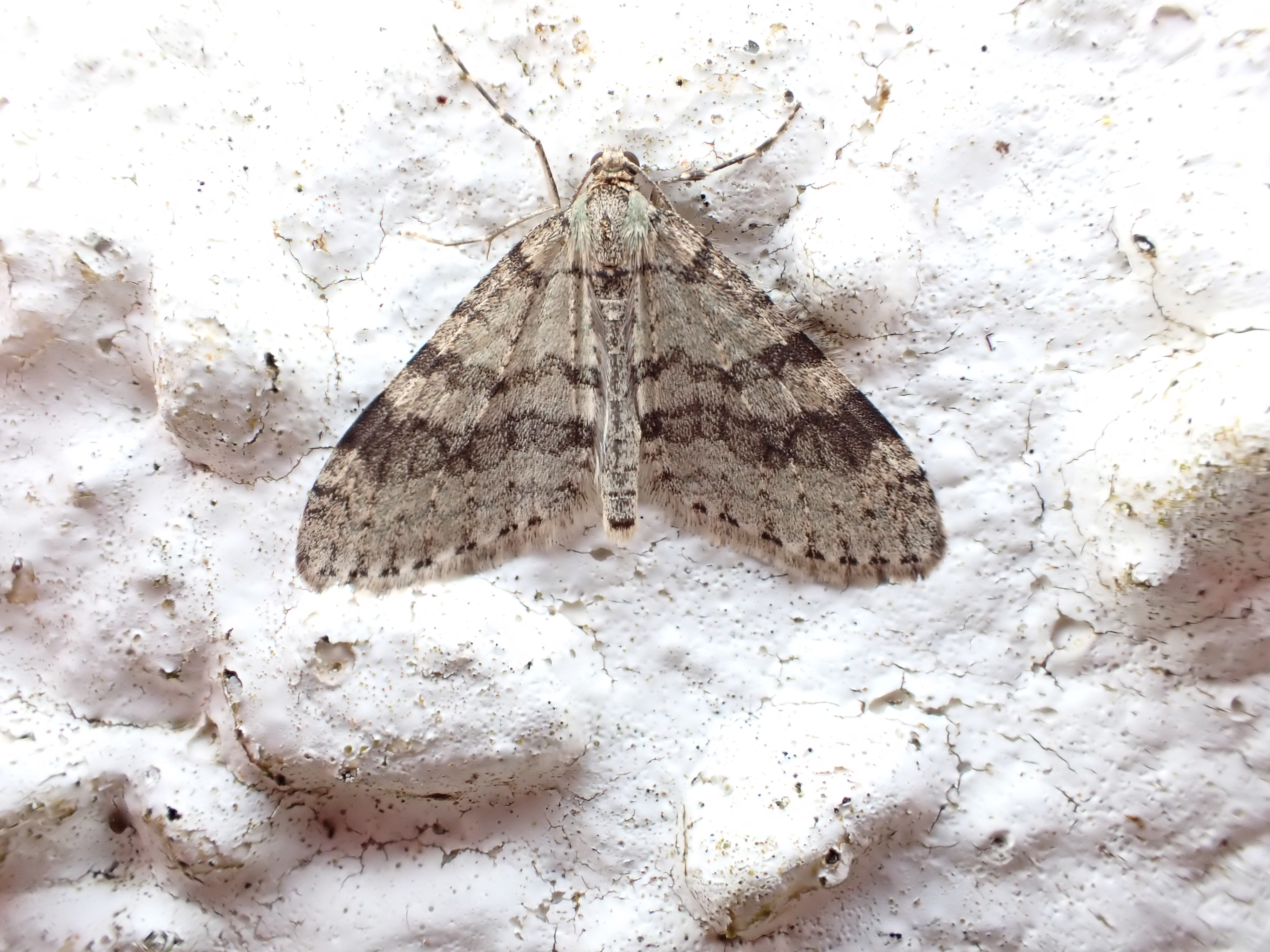
A moth in our conservatory yesterday has been identified by Brian Neath as Autumn Green Carpet (Chloroclysta miata) which he says is another useful record as the only Skye records on the database are from the Rothamsted site at Carbost between 1966 and 1981.

Autumn Green Carpet
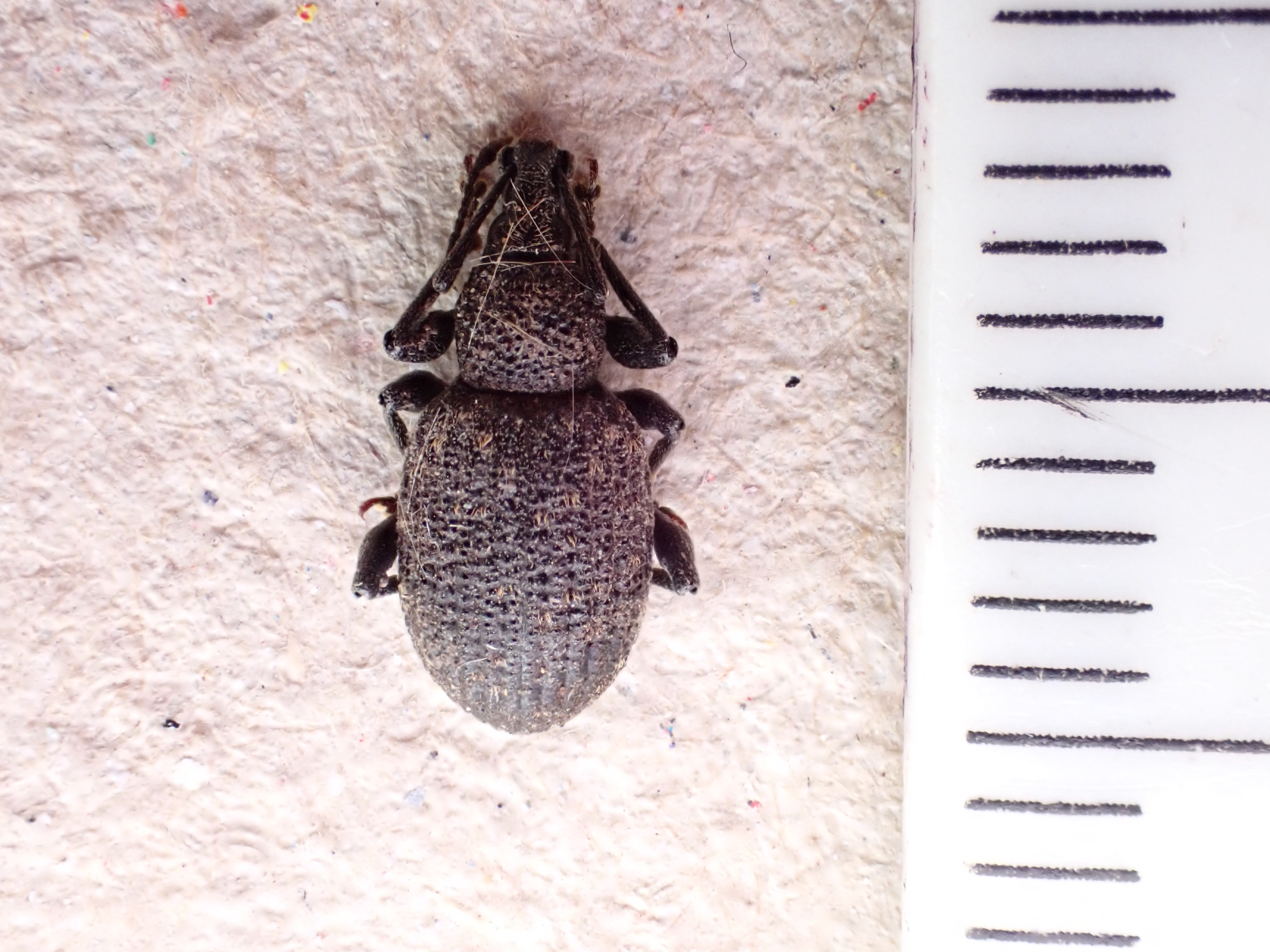
However, a beetle I found in my garage a month or so ago which I gave to Raasay beetle expert Richard Moore has him flummoxed: “looks very interesting, at the moment I’ve no idea what it is!” No doubt further work will sort it out.
That Poa from the Trotternish Ridge
October 1, 2009 by StephenI sent the Poa flexuosa specimen to Tom Cope at Kew who says that sadly it isn’t that species but Poa glauca - not uncommon on the hills of Skye. Ah well.
400 and counting
September 30, 2009 by StephenI notice that 400 different folks have visited my Flora of Raasay and Rona since I started the counter. Nice to know that there is such interest in a somewhat esoteric subject.
Not much botany happening now – the season is largely over, the weather is poor and I am away a lot. However, there will be occasional things to report in the winter months.
The last Equisetum x trachyodon site checked
September 17, 2009 by StephenYesterday I checked the only remaining Equisetum x trachyodon (Mackay’s Horsetail (E. hyemale x variegatum)) site in the vice-county for which I did not have a post-Atlas 2000 record. I was short of time but found a few shoots well up the Hinnisdale River. There was also a new site for Gentianella campestris (Field Gentian) even though the plants were all dried up by this time of year.
Angle Shades Moth
September 13, 2009 by StephenNot very botanical, in fact not botanical at all, but I found this in our garage last night:

Phlogophora meticulosa
which Brian Neath tells me is Angle Shades (Phlogophora meticulosa) and that recent records for Skye and Raasay are few and far between.
Those Herbarium United Specimens
September 11, 2009 by StephenOK, this is only for the specialist, but there are lessons here for any fellow VCRs reading this.
N.B. The specimen descriptions have now been updated on the herariaunited database.
herbariaunited.org/specimen/276998/ University of Birmingham Vaccinium uliginosum
The herbarium sheet gives location as mountain near Luib. This has been catalogued as Luib, Skye but this species has never been recorded in VC104.
However, Luib, Stirling in NN42 is in the centre of the known distribution for this species.
This specimen was collected in July 1876.
There are three other specimens from Luib in July 1876 all also in the University of Birmingham Herbarium:
herbariaunited.org/specimen/273718/ Saxifraga hypnoides presented by Mr Langley Kitching
herbariaunited.org/specimen/266217/ Pedicularis palustris presented by Mr Langley Kitching
herbariaunited.org/specimen/258930/ Polystichum lonchitis presented by Mr Langley Kitching
The first two of these just say Luib (handwritten) as per the Vaccinium specimen but the last says Luib (Ross & Cromarty). Is this a later assumption? And why say Ross & Cromarty rather than Skye?
These three are eminently possible in Skye or Stirling.
As well as the above three, there is one further specimen by Langley Kitching, supposedly from VC104:
herbariaunited.org/specimen/277494/ Linnaea borealis from “Top of Glen Dale, Island of Skye (?)”
This is unlikely on distributional grounds.
On balance I suggest all five of these specimens are unlikely to have come from Skye.
Which leads me to:
herbariaunited.org/specimen/276623/ catalogued as Festuca ovina from Luib.
The sheet appears to say Uig not Luib and the collector, E. F. Linton was certainly in Uig on 6 Aug 1884, the date of the specimen – as is known from specimens in other herbaria.
Also, it was originally described as Festuca glauca which would place it within F. rubra rather than F. ovina - and as far as one can tell from the image it probably is F. rubra.
All this makes me realise that I should spend some time looking at the other specimens assigned to VC 104 in Herbariaunited.